.png)
Harvesting Health from Blue: Anthocyanins, Blueberries & Visceral Fat
By The Evergreen Institute Wellness Team
Introduction
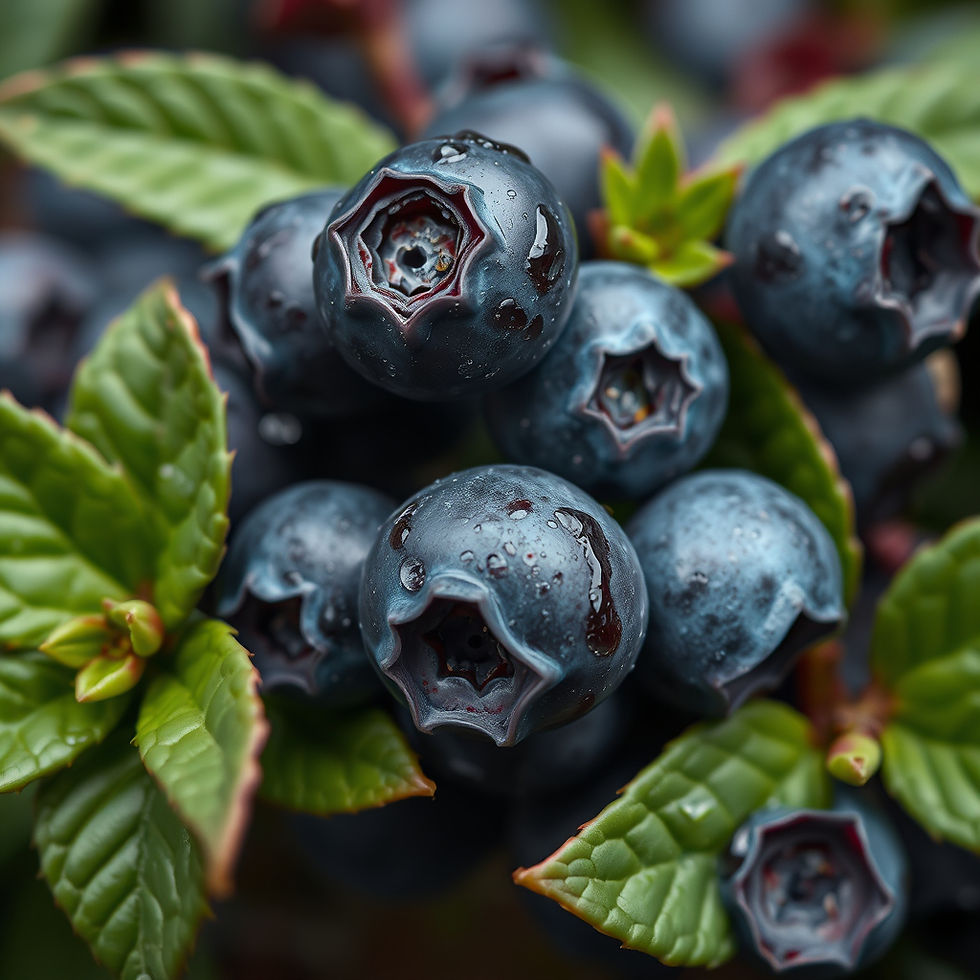
Beneath the deep blue hue of a blueberry lies a powerful class of phytochemicals known as anthocyanins—natural compounds increasingly recognized for their potential to improve metabolic health. Emerging research suggests that anthocyanin-rich foods, especially blueberries, may help reduce visceral fat, the deep abdominal fat strongly linked to cardiometabolic disease (Prior et al., 2010; Wang et al., 2023).
What Are Anthocyanins?
Anthocyanins are water-soluble flavonoid pigments responsible for red, blue, and purple colors in many fruits and vegetables (Khoo et al., 2017). In blueberries, the predominant anthocyanins include glycosides of delphinidin, malvidin, and petunidin. Beyond color, these compounds act as antioxidants and cellular signaling modulators, influencing inflammation, insulin sensitivity, and lipid metabolism (Azzini et al., 2017).
After consumption, anthocyanins are metabolized in the gut and liver, where their breakdown products—and interactions with the gut microbiome—may amplify their health effects (Chen et al., 2024).
Visceral Fat: The Hidden Health Risk
Unlike subcutaneous fat, visceral fat surrounds internal organs and drives systemic inflammation, insulin resistance, and cardiovascular disease (Després, 2012). Reducing visceral fat is a key goal in metabolic wellness programs such as those supported by the Evergreen Institute.
How Blueberries and Anthocyanins May Influence Visceral Fat
1. Reduction of Fat Accumulation
In multiple animal studies, supplementation with blueberry anthocyanin extracts led to decreased body weight gain, improved insulin sensitivity, and smaller visceral fat depots (Prior et al., 2010; Wang et al., 2023). Mechanistically, anthocyanins downregulate adipogenic genes such as PPAR-γ, reducing fat cell formation and lipid storage (Andersen et al., 2014).
2. Increased Fat Oxidation
A randomized human study found that two weeks of wild blueberry supplementation increased fat oxidation during exercise by 19–31%, while lowering carbohydrate utilization (Lynn et al., 2023). This suggests that anthocyanins may shift the body’s fuel preference toward fat, supporting fat loss when paired with regular activity.
3. Gut Microbiota and Inflammation Modulation
Anthocyanins favor beneficial gut bacteria (e.g., Muribaculaceae) and improve intestinal barrier integrity (Zhu et al., 2024). In rodent models, these effects reduced endotoxin-driven inflammation and visceral fat expansion. Additionally, anthocyanins suppress NF-κB signaling, decreasing inflammatory cytokines that promote adipose tissue inflammation (Liu et al., 2023).
4. Human Evidence and Epidemiology
Although human trials vary in design and duration, cohort studies indicate that higher anthocyanin or blueberry intake correlates with lower central adiposity and slower long-term weight gain (Jennings et al., 2012). One 12-week clinical trial found greater reductions in body fat and improved lipid profiles among participants replacing a daily fruit serving with blueberries (Stull et al., 2010).
Practical Recommendations
For those seeking to reduce visceral fat and improve metabolic health:
Consume ½–1 cup of blueberries daily, ideally with meals containing protein and healthy fats to stabilize blood sugar.
Combine with regular exercise—150 minutes per week of moderate activity enhances fat oxidation benefits.
Diversify anthocyanin intake with purple grapes, blackberries, or cherries.
Support gut health through high-fiber, minimally processed diets.
Monitor progress using waist circumference, DEXA scans, or metabolic panels.
Summary
The scientific evidence—though still evolving—supports blueberries as a functional food that may help counteract visceral fat accumulation. By integrating anthocyanin-rich fruits into a balanced diet, individuals may reduce inflammation, enhance metabolism, and improve long-term cardiometabolic outcomes.
At The Evergreen Institute, we continue to explore evidence-based nutritional strategies that harness nature’s biochemical tools to optimize health and longevity.
References
Azzini, E., Maiani, G., & Garaguso, I. (2017). The potential role of anthocyanins in human health: Bioavailability and evidence of protective effects. Nutrients, 9(5), 502. https://doi.org/10.3390/nu9050502
Andersen, Ø. M., Jordheim, M., & Matsumoto, H. (2014). Flavonoids: Chemistry, biochemistry, and applications. CRC Press.
Després, J. P. (2012). Body fat distribution and risk of cardiovascular disease: An update. Circulation, 126(10), 1301–1313. https://doi.org/10.1161/CIRCULATIONAHA.111.067264
Jennings, A., Welch, A. A., Fairweather-Tait, S. J., Kay, C., Minihane, A. M., Chowienczyk, P., &
Cassidy, A. (2012). Higher anthocyanin intake is associated with lower arterial stiffness and central blood pressure in women. The American Journal of Clinical Nutrition, 96(4), 781–788. https://doi.org/10.3945/ajcn.112.042036
Khoo, H. E., Azlan, A., Tang, S. T., & Lim, S. M. (2017). Anthocyanidins and anthocyanins: Colored pigments as food, pharmaceutical ingredients, and the potential health benefits. Food & Nutrition Research, 61(1), 1361779. https://doi.org/10.1080/16546628.2017.1361779
Prior, R. L., Wilkes, S. E., Rogers, T. R., Khanal, R. C., Wu, X., & Hager, T. J. (2010). Dietary blackberries and blueberries lower serum cholesterol and improve glucose control in mice fed a high-fat diet. Journal of Agricultural and Food Chemistry, 58(7), 3970–3976. https://doi.org/10.1021/jf902852d
Stull, A. J., Cash, K. C., Johnson, W. D., Champagne, C. M., & Cefalu, W. T. (2010). Bioactives in blueberries improve insulin sensitivity in obese, insulin-resistant men and women. The Journal of Nutrition, 140(9), 1764–1768. https://doi.org/10.3945/jn.110.125336


